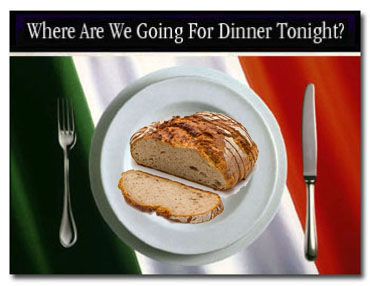

Bread is a food product obtained through fermentation: after shaping, the dough undergoes
leavening and is then baked. It is made from a flour-based dough (refined or wholemeal),
cereals, and water, packaged in different ways and often enriched with a variety of ingredients
depending on where it is prepared.
It can also be unleavened, especially when it needs to be kept for long periods. This should not
be confused with ship's biscuit, also known as "galetta," a long-lasting food (kept for months)
typical of naval crews, which is actually a "bis-cotto," meaning baked twice; several Italian
regional breads are also unleavened. Unleavened bread is widespread in several Middle Eastern
countries and is mostly produced without added salt.
When made in a flat, low form, it is often used as a base for dishes with toppings or fillings
(typical examples of Italian regional flatbread are Neapolitan pizza, focaccia from Genoa,
and piadina from Romagna).
History
Tacuinum Sanitatis (14th century) - Loaf of bread found in the excavations of Pompeii
The oldest bread we know of dates back to around 12,000 BC and was found in Jordan: it was
prepared by grinding a mixture of cereals between two stones and mixing it with water. The
resulting dough was cooked on a hot stone.
Around 3500 BC [citation needed] the Egyptians discovered fermentation: dough left out overnight
would be baked the following day, producing a softer and more fragrant bread. For the Egyptians,
bread was not only a source of food but also of wealth.
Jews eat unleavened bread, "Matzah," to commemorate the Exodus from Egypt: unleavened bread
symbolizes readiness to set out on a journey, given how quickly it can be prepared and how well
it keeps. In remembrance of the Last Supper of Jesus Christ, unleavened bread in the form of
wafers is used in the Eucharist by some Christian denominations (Latin-rite Catholics, Lutherans),
while other Churches (Reformed, Orthodox, etc.) use leavened bread.
From Egypt, the art of baking passed to Greece. The Greeks became excellent bakers, producing
more than 70 varieties. They enriched the basic recipes with ingredients such as milk, oil,
cheese, aromatic herbs, and honey. They were also the first to bake bread at night. At one time
in the countryside, every family or group of families made bread at home and kneaded it by hand.
(source: Wikipedia)
(Selection 2026)