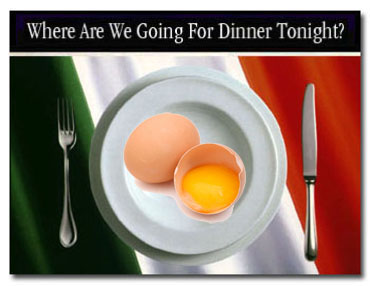

The egg is a food that can be consumed directly or used as an ingredient in many dishes
from cuisines all over the world. The most commonly used is the chicken egg, but eggs
from other poultry are also consumed: quail, duck, goose, ostrich, etc. In common usage,
the term "egg" without further specification refers to the chicken egg. Fish roe is also
consumed (caviar, lumpfish roe, and other roe), as well as the eggs of turtles, molluscs
(snails), insects, etc.
Morphology
The egg is a female germ cell consisting essentially of shell, yolk and albumen. These
parts are flanked by a series of other structures, starting with the cuticle, which covers
the shell externally and is the first protective barrier against the penetration of germs.
While the cuticle allows the passage of gases that filter through the pores of the shell,
it instead prevents the loss of water that is important for the survival of the embryo.
The cuticle contains various minerals obtained by the animal's ingestion of small, more or
less rounded, stony fragments or other sediments; these are also used to make the
digestion of seeds or other foods more comfortable to grind.
Beneath the shell is a double layer called the "membrana testacea" (shell membrane),
which also has a protective function and adheres closely to the shell at all points except
at the blunt end, where it separates to form a space called the "air cell." In the middle
of the albumen — made up predominantly of proteins and water — sits the yolk, surrounded
by a vitelline membrane. The yolk is held in a central position by protein ligaments
called "chalazae," which extend from it toward the poles of the egg, intertwining with
the proteins of the albumen.
Albumen is also commonly called "egg white."
The color of the shell depends exclusively on the breed and has no influence on the
sensory characteristics or nutritional value of the egg. The color of the yolk, on the
other hand, depends on the pigments contained in the feed, or intentionally added, to
obtain a color that follows the preferences of the consumer. Italians, for example,
prefer an intensely colored yolk, while in other countries, such as the Netherlands,
softer colors are preferred. The same applies to shell color: Italians prefer colored
shells, unlike other countries such as the United States, where white-shelled eggs are
preferred.
(source: Wikipedia)
(Selection 2026)